Introduction
A stop-loss order instructs you to close a position once the price reaches a chosen level. But it sets the trigger, not the fill. Those are two different things, and the difference becomes clear at the exact moment a trader relies on the order most.
This piece covers what the instruction actually says, the three conditions that separate the trigger price from the fill price, and what that separation looks like on a real position.
What a Stop Loss Order Instructs
The order rests on the platform until price touches its level. At that moment, it converts to a market order and fills at the next available price. The word stop describes a trigger condition, and nothing in the order addresses what price the trade closes at.
In a liquid market moving in small increments, the fill lands at or within a fraction of the level, and the distinction never surfaces. A trader places hundreds of stops that fill where expected, concludes the level is guaranteed, and carries that conclusion into the session where it is wrong.
Three Conditions That Widen the Gap
Price Gaps
Between a Friday close and a Monday open, or across a scheduled announcement, price can move from one level to another without transacting in between. A stop sitting inside that span triggers at the first price printed on the far side.
Thin Liquidity
A fill needs a counterparty at that price. Where few resting orders exist, the order works down through whatever depth is available until it is filled, pushing the average price further from the trigger at each step.
Velocity
When price travels through several levels in one direction within seconds, every stop sitting in that range triggers into a market already moving away from them. The queue itself adds to the move.
What It Looks Like on a Position
Illustrative figures only.
- Entry: Long index CFD at 4,200
- Stop placed at: 4,170
- Intended risk: 30 points
- Position sized at: $10 per point
- Planned loss if stopped: $300
An announcement lands outside market hours. The index reopens at 4,120, having never traded between 4,168 and 4,122.
- Trigger level touched: Yes, at the open
- First available price: 4,120
- Actual exit: 4,120
- Realized move: 80 points
- Realized loss: $800
The order executed correctly. It closed the position at the first price the market offered after its condition was met, which is precisely what it was instructed to do. The $500 difference came from the market, not from the order.
Placing the Stop Loss
A tighter stop does not reduce gap exposure. It narrows the distance price must travel to trigger, making the order more likely to fire, but it doesn't affect where the market reopens. Two traders holding the same instrument through the same announcement, one with a 30-point stop and one with a 100-point stop, may both exit at the same price.
Position size is the control that works here, because size determines what a given gap costs regardless of where the stop sat. A trader who wants a hard ceiling on a gap outcome gets it by holding less, not by placing the exit closer.
Setting the Exit While the Market Is Quiet
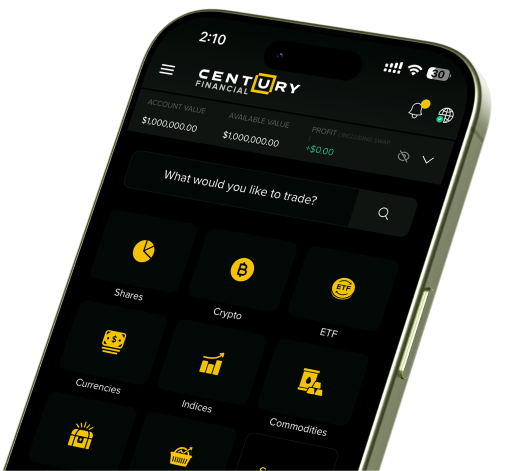
The useful gap to close is between choosing a level and having it attached. Both the Century Trader App and MT5 attach a stop loss at the point of order entry rather than afterward, so the exit is fixed while conditions are calm, not added once something is already moving. Thirty-five years of working with traders through gap events sits behind how Century approaches that stage.
Instruction, Not Promise
A stop loss order is a conditional instruction. It states the price at which a position should begin closing and says nothing about where that close will land. A trader controls the level, the instrument, and the size; the fill belongs to the market.
Century Financial Limited is regulated by the FSC in Mauritius and has had this conversation with traders many times. If you want a second look at where your exits sit before the next scheduled event, the team is available to talk it through.
FAQs
The content in this blog, including any research, analysis, opinions, forecasts, or other information (collectively, "Information"), is provided by Century Financial Limited (the “Company”) for marketing, educational, and general informational purposes only. It should not be construed as investment advice, a recommendation, or a solicitation to buy or sell any financial instruments.
This Information may also be published across various channels, including Company’s website, third-party platforms, newsletters, marketing materials, emails, social media, messaging apps, webinars, and other communications. While the Company strives for accuracy, we do not guarantee the completeness, reliability, or timeliness of any content. Any decisions made based on this Information are at your own risk. The Company accepts no liability for any loss or damage arising from its use.
Trading in financial products involves significant risk and may not be suitable for all investors. Please ensure you fully understand the risks and seek independent professional advice if necessary.
The Company is licensed and regulated by the Financial Services Commission (FSC) of Mauritius as an Investment Dealer (Full Service – Excluding Underwriting) under License No. GB24203860.
Please refer to the full risk disclosure mentioned on our website.