MU | Century Financial Limited

Introduction
Interest rate decisions taken abroad do not stop at the border. For a Pakistani trader holding both domestic and international exposure, a single announcement reaches the portfolio by several separate routes, and those routes run at very different speeds. Understanding which channel is arriving explains much of the otherwise confusing price behavior.
Two Cycles, Not One
The common misreading treats domestic and global rates as one story with a delay attached. They behave more like two stories that occasionally intersect.
Central banks answer to their own mandates. The Federal Reserve targets 2% inflation. The State Bank of Pakistan works toward a medium-term range of 5% to 7%, alongside an external position controlled by import dependence, reserve levels, and program commitments. Those differences mean the two can tighten and ease at different times, and periodically in opposite directions.
Three Channels, Three Speeds
Immediate: Dollar-Denominated Prices
Within minutes of an announcement, dollar-priced instruments reprice. Gold, currency pairs, indices, and commodities respond to the decision and to the language accompanying it.
- Priced instruments move during the release itself
- Forward guidance often matters more than the rate
- Spreads typically widen around announcements
Medium: Currency and Capital Flows
Over subsequent weeks, a shifting gap between domestic and foreign rates influences where capital moves and how the exchange rate behaves. Import charges and remittance values adjust alongside.
- Differentials affect each currency's relative appeal.
- Import-dependent economies feel energy pricing sooner.
- Effects accumulate over weeks, not hours.
Slow: The Domestic Response
Central banks do not mirror each other. Any SBP response reflects domestic inflation and external conditions, which means it may arrive a cycle or two later, in reduced form, or not at all.
- KIBOR tracks the domestic policy rate closely
- Domestic borrowing costs reprice from KIBOR.
- A response is possible, not automatic.
Why the Differential Matters More Than the Level
The gap between two policy rates tends to be more informative than either rate alone. It shapes the relative return on holding rupee assets against dollar assets, and it influences the pressure acting on the exchange rate.
What makes this practically useful is that the gap can change without any domestic decision. A foreign central bank tightening while the SBP holds narrows the differential just as surely as a domestic cut would. A Pakistani portfolio can therefore be repriced by a meeting no domestic institution attended, which is the part most often missed.
Watching Two Calendars From One Place
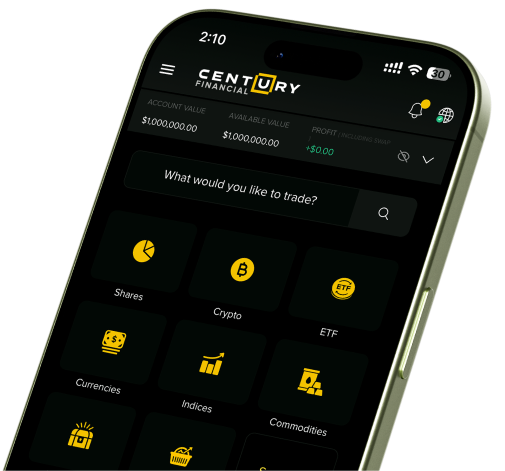
Following two policy cycles means tracking two sets of scheduled dates, and the affected instruments sit across currencies, commodities, indices, and shares rather than in one market. The Century Trader App and MT5 include an economic calendar alongside those instruments, so you can review an upcoming announcement and the affected positions together.
Century Financial is regulated by the Financial Services Commission (FSC) in Mauritius, with more than 35 years across market cycles and multilingual support for traders working across both sets of announcements.
Same Decision, Three Arrivals
The key takeaway is that one announcement does not produce one effect. It produces an immediate repricing in dollar-denominated markets, a slower adjustment running through currency and capital flows, and a domestic policy response that may arrive late, arrive smaller, or never arrive. A trader watching only the first channel sees a third of the picture. A trader waiting for the third has already lived through the other two without recognizing them.
Both calendars are published well in advance, making this one of the few areas of market analysis that requires little forecasting. With Century's platforms providing the financial calendar and smooth access to global markets, neither the decisions nor your strategy execution need to be unclear.
FAQs
Disclaimer: CFDs are complex instruments and come with a high risk of losing money rapidly due to leverage. 74–89% of retail investor accounts lose money when trading CFDs. You should consider whether you understand how CFDs work and whether you can afford to take the high risk of losing your money. Past performance is not indicative of future results. This content is for informational purposes only and does not constitute investment advice or a recommendation to buy, sell, or hold any financial instrument. Century Financial does not guarantee the accuracy, completeness, or timeliness of this information and accepts no liability for any loss arising from its use.