MU | Century Financial Limited

Introduction
Despite its perceived complexities, trading can become easy to understand for people willing to learn. This How to Trade series, in four weekly parts—Week 1, Week 2, Week 3, and Week 4—covers ideas and aspects for anyone who wants to become a trader.
Week four covers the trading plan: what it includes, how to write rules specific enough to test, what to record in a journal, and how to tell the difference between a bad run and a method that doesn’t work.
What a Trading Plan Is For
A trading plan is a written document that decides things in advance. Every choice it settles beforehand is one you don’t have to make while a position is open and your judgment is under pressure. With the plan written, trading becomes more about execution rather than decision.
This is also why it has to be written rather than held in your head. A written one either was followed, or it was not, and that distinction becomes the basis of every review you do later.
What Goes In It
A workable plan answers five questions. The first four have already been covered across this series.
| Part of the plan | The question it answers |
|---|---|
| Markets | Which instruments do I trade, and during which hours? |
| Risk | What can one trade cost me, and when do I stop? |
| Entry | What specifically has to be true before I act? |
| Exit | Where do I get out, in both directions? |
| Review | When do I look back, and at what? |
Weeks one and two produced the first two rows. Week three gave you the chart reading that the entry and exit rows depend on. This week fills in the rest.
Making Rules Specific Enough to Test
A rule works only if it is specific enough that two people reading it would take the same trade.
That’s mostly the reason why "Buy when the trend looks strong" fails that test. Two readers will disagree about what strong means, and so will the same reader on two different days. "Buy when price closes above the 50-day moving average after at least three consecutive higher lows" is less ambiguous. You can look at a chart and reach a more definitive conclusion.
What Makes a Rule Testable?
- It names a specific condition rather than a feeling
- Two people reading it would reach the same answer
- You can check it against past charts
- It can be clearly false
What to Record in a Journal
A journal records what you did and why. Five columns cover most of what matters and can be good starting place to build on.
| Column | What it captures |
|---|---|
| Date and instrument | Which market, which session |
| Entry reason | The specific rule that triggered it |
| Size and stop | What was risked, and where the exit sat |
| Result | What actually happened |
| Plan followed? | Yes or no |
The last column could prove to be quite load-bearing, because recording the result tells you whether a trade won. Recording whether you followed the plan tells you whether the result means anything.
Telling a Bad Run From a Bad Method
A losing stretch does not tell you your method is broken. Week two covered the arithmetic: a method that wins half its trades would also eventually produce ten consecutive losses. The journal gives you a better test. Separate your trades into two groups: ones where you followed the plan and ones where you did not.
If the plan-following trades lost, you have information about the method. If most of your losses came from trades that broke the plan, you have information about yourself. These lead to completely different responses, and you cannot tell them apart without the record.
This Week's Output
By the end of week four, you should have one document covering five things: The instruments you trade and when. What a single trade can cost and when you stop for the day. The conditions that have to be true before you enter. Where you exit in both directions. And when you review, which for most people is weekly rather than after every trade.
Where the Record Comes From
A review needs raw material, and most of it already exists. Every order placed leaves a record of the instrument, the size, the entry and exit prices, and the timestamps, which covers four of the five journal columns automatically.
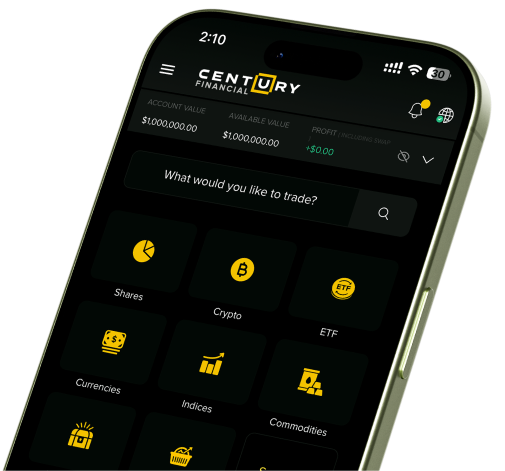
What the account cannot record is the reason you entered and whether you stuck to the plan. Those two have to be written by you, and they are the ones a review actually turns on. Century Financial's demo environment on the Century Trader App and MT5 is where you build that habit without putting your capital at stake. Century Financial is regulated by the Financial Services Commission (FSC) in Mauritius.
Thirty Days, One Document
Four weeks won't make anyone a skilled trader, and it never will. What it can produce is a written trading plan built on things you actually understand: how a price forms and moves, what a loss costs before you take it, what a chart does and does not show, and rules specific enough to be judged. Most people reach month six without any of that, which is why they cannot tell whether their approach works or whether they've followed it.
The plan isn't finished, and it shouldn't be. Revise it as you learn which rules were too vague and which markets you actually watch. Keep the journal honest, review weekly, and change the plan deliberately rather than mid-position. A demo account lets you practice for free, and the habits you build there carry forward.
FAQs
The content in this blog, including any research, analysis, opinions, forecasts, or other information (collectively, "Information"), is provided by Century Financial Limited (the “Company”) for marketing, educational, and general informational purposes only. It should not be construed as investment advice, a recommendation, or a solicitation to buy or sell any financial instruments.
This Information may also be published across various channels, including Company’s website, third-party platforms, newsletters, marketing materials, emails, social media, messaging apps, webinars, and other communications. While the Company strives for accuracy, we do not guarantee the completeness, reliability, or timeliness of any content. Any decisions made based on this Information are at your own risk. The Company accepts no liability for any loss or damage arising from its use.
Trading in financial products involves significant risk and may not be suitable for all investors. Please ensure you fully understand the risks and seek independent professional advice if necessary.
The Company is licensed and regulated by the Financial Services Commission (FSC) of Mauritius as an Investment Dealer (Full Service – Excluding Underwriting) under License No. GB24203860.
Please refer to the full risk disclosure mentioned on our website.