MU | Century Financial Limited

Introduction
Contracts for difference attract more confident commentary than most financial instruments, and a fair amount of it does not survive checking. Some CFD myths overstate the risks, while others quietly understate what you are giving up. One claim frequently dismissed as a myth turns out to be accurate, which makes it the most useful item on this list.
Five Claims Worth Checking
Myth 1: CFDs Are Just Gambling
A CFD is a regulated derivative contract tracking an underlying market price, traded through licensed firms under defined conduct rules. That is a different category from a wager, structurally and legally. Where the comparison has some force is in usage rather than instrument because high leverage applied without position limits produces outcomes that resemble gambling regardless of what is being traded.
Myth 2: Trading CFDs Gives You Ownership
A share CFD tracks a share or asset's price, which leads some traders to treat the two as interchangeable. A CFD holder appears on no share register, holds no voting rights, and has no claim on the company in an insolvency. The distinction that matters most is counterparty. Holding a CFD means holding a contract with your broker, so the broker's financial standing and how it segregates client funds become part of your risk.
Myth 3: CFDs Are Unregulated
CFDs are regulated across most major jurisdictions, including by the FSC in Mauritius, the FCA in the United Kingdom, ASIC in Australia and CySEC in Cyprus. They are, however, restricted for retail clients in some markets and unavailable in others. Leverage caps, margin close-out thresholds, and client protections differ considerably between regulators, which is why the licensing entity matters more than the label.
Myth 4: Leverage Means Bigger Profits
Leverage increases position size relative to deposited capital. It does not favor direction, so it scales gains and losses in the same proportion. The practical effect is usually the opposite of what the myth suggests. Larger positions reach margin thresholds faster, meaning a leveraged position can be closed out by a move that an unleveraged one would have absorbed.
Myth 5: CFDs Only Work for Day Trading
Nothing in the contract forces a position to close within a session, and CFDs have no expiry date. Longer holds are possible. What matters more is the cost. Financing accrues nightly on the funded portion of a leveraged position, calculated on full exposure rather than margin posted, so a multi-month hold carries a running charge that a share position does not.
What Is Not a Myth
The claim that most retail CFD traders lose money is accurate, and it is worth stating plainly rather than working around. Regulatory analysis across EU jurisdictions by ESMA found that between 74% and 89% of retail investor accounts typically lose money trading CFDs, with average losses per client between €1,600 and €29,000.
The figures describe how leverage is commonly used rather than an inevitable property of the instrument. They are still the single most useful number anyone considering CFDs can know.
Where Century Fits on This
A list like this only helps if the broker behind it discloses the same things when it is inconvenient. Century Financial publishes its regulatory standing openly: the entity serving global clients is licensed by the Financial Services Commission (FSC) in Mauritius, and account terms, including margin thresholds and financing rates, are documented rather than implied.
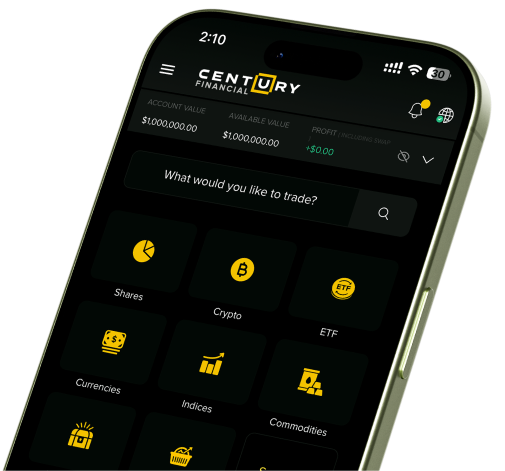
The education-first approach across more than 35 years reflects the same reasoning. Clients trading CFDs on the Century Trader App and MT5 have access to the same instruments and the same information, with multilingual support available.
Check the Claim, Then Check Your Broker
Four of these five claims fall apart under inspection, though not all in the same direction, and not because CFDs are safer than their reputation. They fall apart because they describe the instrument imprecisely, and the actual risks sit elsewhere: in leverage selection, in position sizing, in financing costs on long holds, and in the wide variation between regulators.
The most practical thing to take from this is a habit rather than a conclusion. Every claim above resolves differently depending on which broker and which regulator you are dealing with, so the answers worth having are the ones you get from your own account documentation. Century Financial's terms, regulatory details and risk disclosures are available to read before you commit anything, and reading them is a reasonable first step.
FAQs
Disclaimer: CFDs are complex instruments and come with a high risk of losing money rapidly due to leverage. 74–89% of retail investor accounts lose money when trading CFDs. You should consider whether you understand how CFDs work and whether you can afford to take the high risk of losing your money. Past performance is not indicative of future results. This content is for informational purposes only and does not constitute investment advice or a recommendation to buy, sell, or hold any financial instrument. Century Financial does not guarantee the accuracy, completeness, or timeliness of this information and accepts no liability for any loss arising from its use.